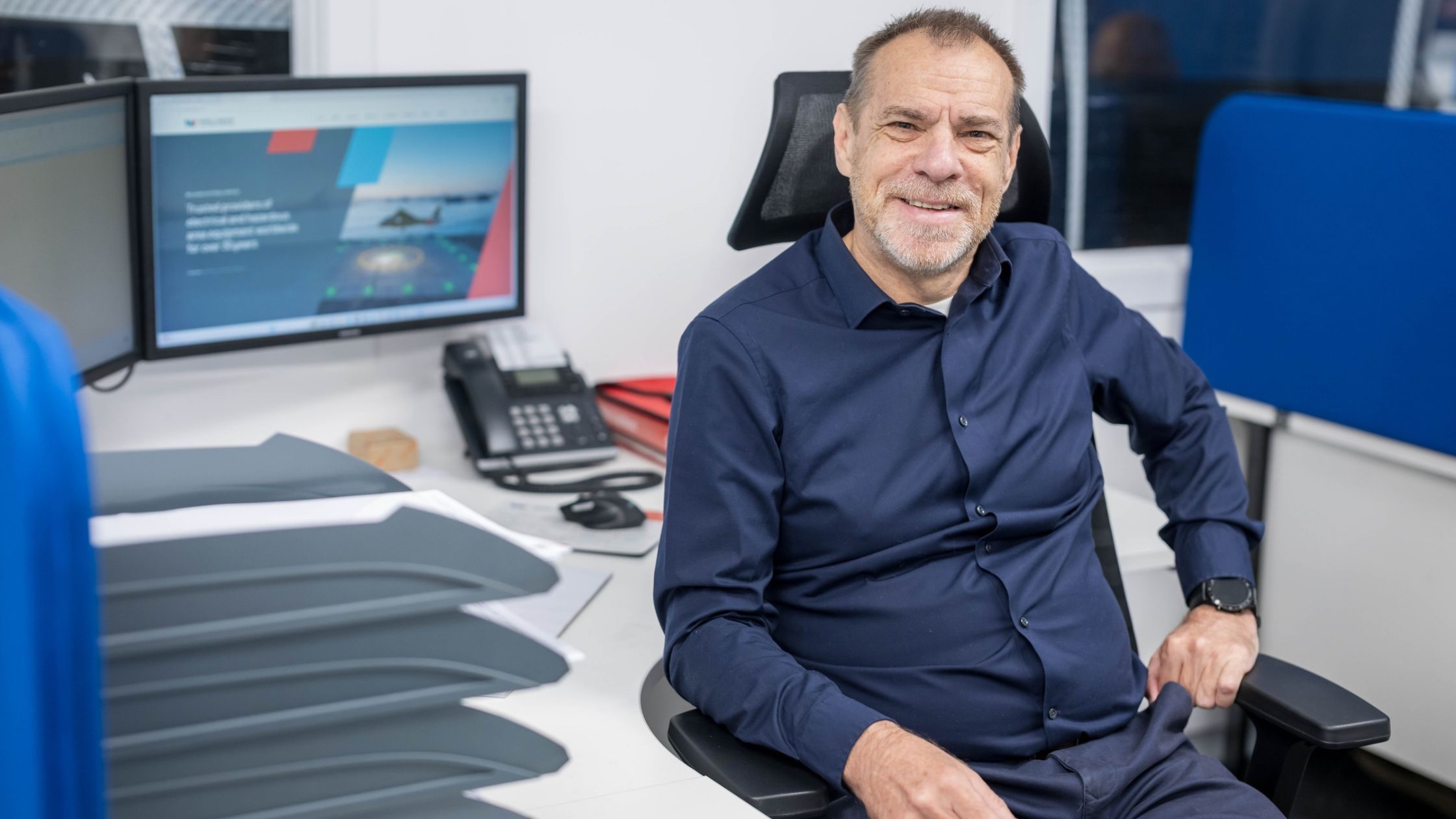
Some jobs take you to places you’d never otherwise see. Brad Scarrott’s has taken him from the North Sea to Russia, Iran, Nigeria, Qatar and the middle of the Caspian Sea, all in the service of one thing: making sure ships and aircraft know exactly what’s out there.
Brad recently joined Wellhead Electrical Supplies, bringing nearly 25 years in Aids to Navigation with him. We sat down with him to talk about how he got into it, what operators most often get wrong, and the job that tested him more than any other.
How did you first get into Aids to Navigation?
“I liked the idea of working directly with end users, and the crossover between oil and gas and the ports and harbour side of things. That mix is what drew me in, and it’s what’s kept it interesting. It’s taken me to some genuinely fascinating places over the years, places I’d never have ended up otherwise.”
What’s a common misconception people have about navigation lighting?
“That it doesn’t really matter. It absolutely does. It’s a safety-critical system, and it’s there to do a job, hopefully one that’s never actually needed. But the whole point is that it works when it is. It’s easy to think of it as just another fitting until you understand what it’s there to prevent.”
What’s the question you get asked most by operators?
“Compliance, almost every time. It usually comes up sharpest after an OPRED inspection, OPRED being the government’s offshore inspector. That’s often the moment an operator realises they need to get on top of their systems, and it’s the point a lot of my conversations start from.”
What’s the one thing you wish more operators did before a problem became urgent?
“Maintenance. Better maintenance, and crucially, preventative maintenance. So much of what becomes an urgent, expensive problem could have been caught early with a proper routine in place. The systems will tell you they’re struggling long before they fail, if someone’s looking.”
The move from incandescent to LED is a big talking point. What should operators be thinking about?
“Plan ahead, and don’t leave it too late. It’s always more cost-effective to plan a change than to react to one. The operators who get ahead of it, on their own timescale, will always be in a better position than the ones scrambling when something fails and the old parts aren’t there any more.”
What’s the trickiest environment you’ve worked in, and what did it teach you?
“Working offshore in the Caspian Sea, with no communications back to the office. That really put my problem-solving to the test, you learn quickly when there’s no one to call. “The countries around the Caspian are mostly former Soviet states, and at the time the infrastructure wasn’t what you’d find in Europe. So I had to plan my calls back to the UK in advance, and work out ahead of time exactly what information I might need. It became a job all about anticipation, thinking two or three steps ahead, because if I hadn’t asked the right question before I lost contact, I’d be stuck. It taught me to prepare properly, and to trust my own judgement when there was no other option.”
Where are some of the more interesting places the job has taken you?
“Quite a list over the years, Russia, Iran, Nigeria, Angola, Sardinia, Qatar, the UAE, India and South Africa. Aids to Navigation is needed wherever there’s traffic on the water, so the work really can take you anywhere.”
What surprised you about joining WES?
“The friendliness, honestly. The team are close-knit and work well together. That’s not something you find everywhere, and it makes a real difference to how the days go.”
And finally, what would people be surprised to learn about you?
“A few things. I make things out of wood, table lamps and the like, I find it oddly relaxing after a week of navigation systems. I’m a terrible golfer, and I’ve made peace with that. And in a previous life working for the Ministry of Defence, I once met the Duke of Kent!”
Thinking about your own navigation lighting, or facing a compliance question after an inspection? Brad and the team are always happy to help.
Get in touch with WES.